
Pet parents are thoughtful shoppers. Whether they’re choosing a new kibble, comparing flea and tick treatments, or hunting for the “one toy” their dog won’t destroy in 10 minutes, they’re doing research, reading reviews, and weighing options carefully.
For pet brands, that creates a challenge and an opportunity: attention is expensive everywhere else, but pet retailers are one of the few places where people are already in a shopping mindset (and where advertising can be measured against real retail outcomes, not just clicks!)
That’s where Petbarn’s pet retail media network, PetAds, comes in. In this guide, we’ll break down what it is, how it works in Australia, and why it’s become a go-to approach for retail media advertising when you want to reach the right pet parents and measure the outcome.
What is a Pet Retail Media Network?
A pet retail media network is advertising run through a pet retailer’s owned media channels – designed to help brands reach shoppers while they’re browsing, researching, or buying pet products.
You can think of it as retail media advertising tailored to the pet category: it connects a brand’s message with pet parents in high-intent moments, using retailer insights to make campaigns more relevant and more measurable.
Placements within the PetAds ecosystem include:
- Onsite product discovery (e.g., sponsored placements near search or category browsing)
- Category or product page placements where shoppers compare options
- Brand destinations that help shoppers explore a range and build confidence
- Onsite display-style placements that support awareness and consideration
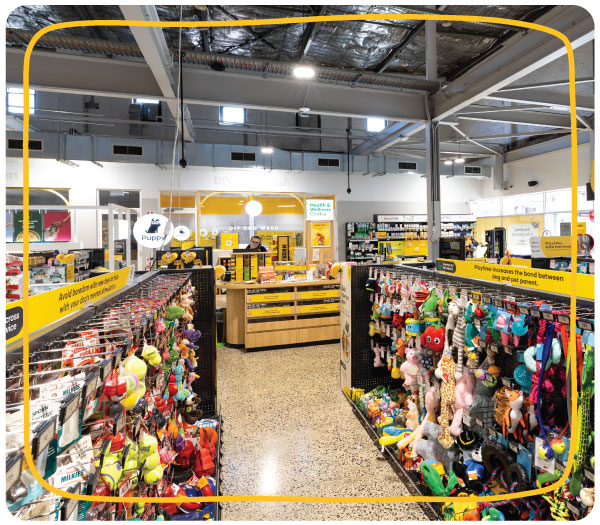
- In-store executions (e.g., POS signage and in-store screens that influence decisions at the shelf)
- Offsite extensions that help you reach pet parents beyond the retailer using privacy-safe audiences
The key idea is simple: rather than trying to interrupt pet parents somewhere else, you show up when they’re already thinking about pet needs, and you can connect activity to outcomes more directly.
Why Retail Media Works So Well for Pet Brands
Pet is a category built on trust, routine, and care. That’s exactly why retail media can be such a strong fit.
1. You meet pet parents in high-intent moments
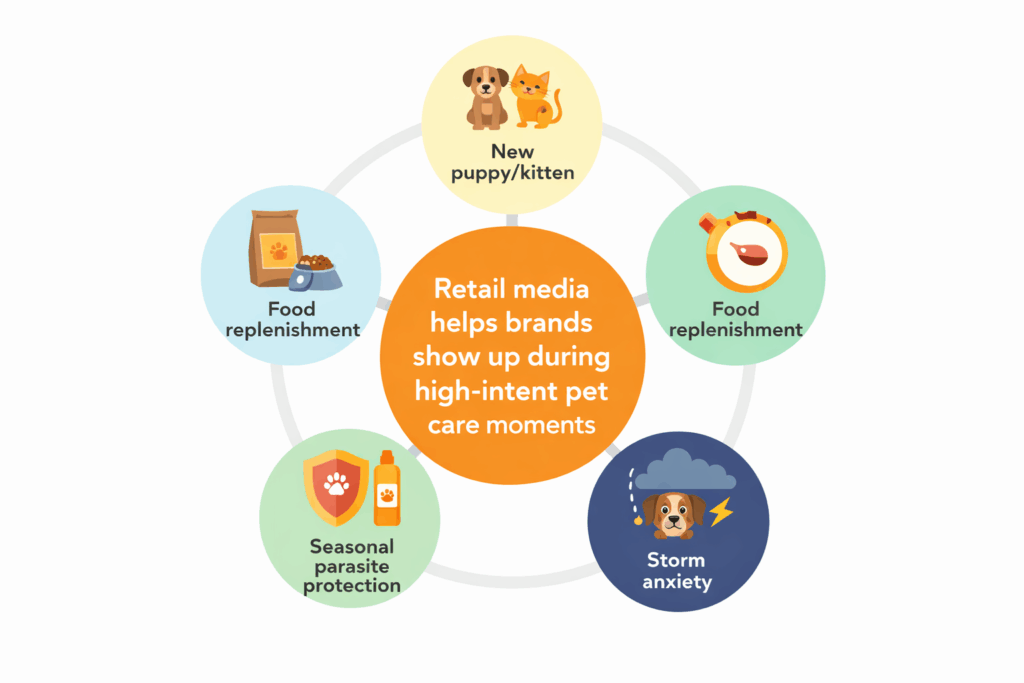
Many pet purchases are repeatable, time-sensitive, or problem-solving:
- Running out of food
- Managing allergies or sensitivities
- Seasonal parasite prevention
- Welcoming a puppy or kitten
- Supporting ageing pets
PetAds lets you align your message with those moments; your advertising feels useful, not pushy.
2. The pet category needs reassurance, not hype
Pet parents don’t just want a discount. They want confidence:
- “Is this right for my pet’s age/breed/needs?”
- “Is it safe?”
- “Do other pet parents rate it?”
- “Will my pet actually eat it?”
Retail media is a natural place to provide that reassurance with benefit-led creative, proof points, and clear product education, especially when your ad appears alongside the products and categories it relates to.
3. First-party data can make targeting smarter (and more privacy-safe)
A big advantage of PetAds activity is that it is powered by first-party data – retailer insights based on how people browse and shop, rather than relying only on third-party cookies.
In plain terms: you can align your campaign to what pet parents are interested in, without needing to “follow them around” the internet in a way that feels creepy.

4. Measurement is closer to the point of purchase
With traditional open web advertising, proving impact can get fuzzy; you’re often relying on proxy metrics like impressions and clicks, or attribution models that don’t always reflect what happened at the shelf. With PetAds retail media, you’re closer to real shopping behaviour. We use closed-loop measurement to connect campaign activity to on-site actions and purchase outcomes, so you can focus on signals that actually matter, like:
- Product discovery and engagement signals (browse, search interaction, product detail views)
- Conversion actions (add-to-cart, purchase attribution)
- Consideration behaviours (e.g., brand page engagement)
- Performance trends over time (what improves with optimisation week to week)
For pet brands, that means you can spend with more confidence, and learn faster.
How Pet Retail Media Networks Work for Pet Brands – Step by Step
If you’re new to pet retail media campaigns, here’s the simplest way to think about it:
1. Start with a Clear Objective
Before you choose placements, decide what you’re trying to achieve:
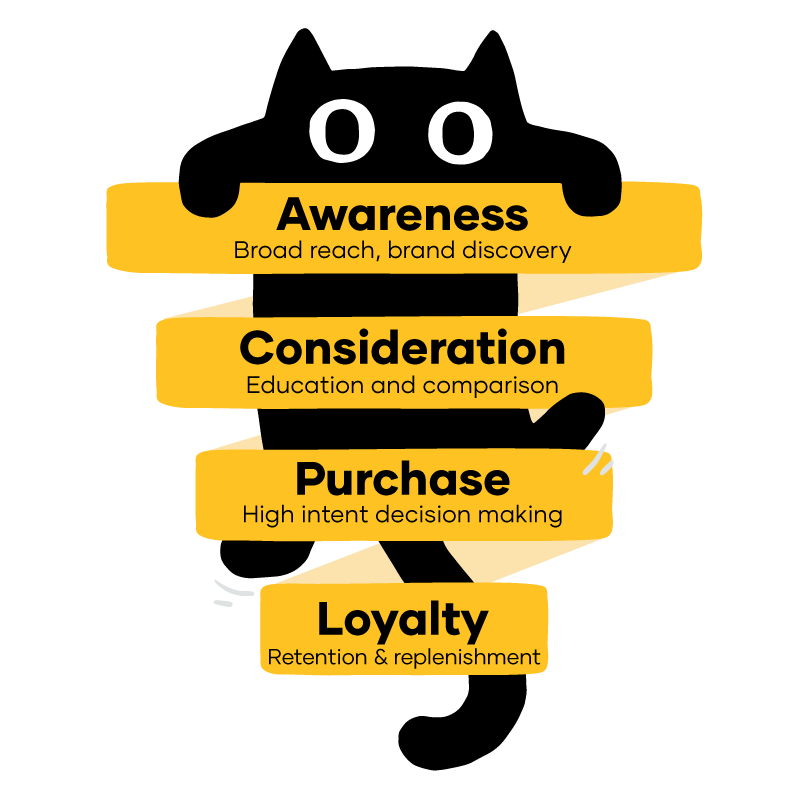
- Awareness: introduce your brand or range to new pet parents
- Consideration: help shoppers compare, understand benefits, and build trust
- Sales: drive conversion for hero SKUs, bundles, or promotions
Being specific upfront helps everything else (creative, targeting, reporting) stay focused.
2. Choose the right placements for the job
Different placements support different goals. For example:
- If you need discovery, you may prioritise placements that appear during browsing or search behaviour.
- If you need confidence, you may invest in richer environments that tell your story and answer questions.
- If you need conversion, you’ll want placements that sit close to product choice.
3. Decide on targeting: context, audience, or both
Most strong campaigns combine:
- Context: show up in the right category moment (e.g., “sensitive stomach”, “puppy essentials”, “dental care”)
- Audience: reach relevant pet parents using privacy-safe first-party signals (where available)
This is a practical way to advertise to pet owners without wasting budget on people who aren’t in-market.
4. Build creative that’s made for pet parents
The best-performing retail media creative usually does three things quickly:
- states the benefit (“gentle on sensitive stomachs”)
- adds proof (“vet-formulated”, “complete and balanced”, “real ingredients”—only if accurate)
- removes friction (“available in 3 sizes”, “for puppies under 12 months”, “easy subscription”—if relevant)
Think education + reassurance, not big-brand hype.
5. Measure, learn, and optimise (weekly)
Retail media is rarely “set and forget.” A simple weekly rhythm is usually enough:
- Review what’s driving engagement and conversion
- Adjust creative, placements, or emphasis on hero SKUs
- Keep notes on what you learned (so the next campaign starts smarter)
The Shopper Journey
Best-use Scenarios (When PetAds Retail Media is the Right Choice)
Launch
a new range, flavour, format, or benefit (and drive trial).
Defend
your position in a competitive category.
Educate
pet parents about a benefit (e.g. mobility, skin & coat, calm).
Amplify
seasonal needs (parasites, storms, summer heat, travel).
Reach
Australian pet owners who are actively browsing and buying.
Promote
without relying on discount-let messaging.
If your brand has something meaningful to say – and you can back it with clear product benefits – PetAds retail media activity can be a powerful way to put that story in front of the right people.
Common Mistakes Pet Brands Make (and How to Avoid Them!)
Treating retail media like “set and forget”
Retail media rewards iteration. Plan for light-touch optimisation each week, especially early in a campaign.
Using generic creative that could fit any brand
Pet parents can spot “marketing fluff” instantly. Lead with a real benefit and a reason to believe—then keep it clean and readable.
Only backing one SKU (or too many)
Start with a hero SKU or a tight group of products that match the campaign objective. Expand once you’ve learned what works.
Measuring clicks instead of outcomes
Clicks can be useful, but they’re not the goal. Align reporting to your objective (awareness, consideration, or conversion), and optimise toward meaningful movement.
Mistake 5: Ignoring stock, pricing, and promo alignment
The best campaigns fall flat if the product isn’t available, priced competitively, or supported properly during the flight.
Checklist – Your First PetAds Retail Media Campaign in Australia

Use this checklist to keep your first campaign simple, clear, and performance-ready:
- Objective chosen (awareness, consideration, or sales)
- Hero SKU(s) selected (and aligned to the objective)
- Stock and pricing confirmed for the campaign period
- Retail assets ready (images, descriptions, claims, FAQs, reviews)
- Targeting plan mapped (context + audience approach where available)
- Creative variants prepared (at least 3–5 variations)
- Measurement plan agreed (what success looks like, weekly review cadence)
- Learning agenda defined (what you want to test and learn)
If you can tick those off, you’re already ahead of most first-time campaigns.
Ready to reach pet parents at the moments that matter?
A pet retail media network helps you connect with pet parents when they’re actively shopping – using smarter, privacy-safe signals and measurement that’s closer to real outcomes.
If you’d like help choosing the right approach (and building creative that pet parents actually trust), PetAds can help you put together a plan that’s clear, measurable, and genuinely useful.